5 days Fes and Meknes

Duration

1 Days

Max People

40

Min Age

3+

Pickup

Comfortable Car

Overview

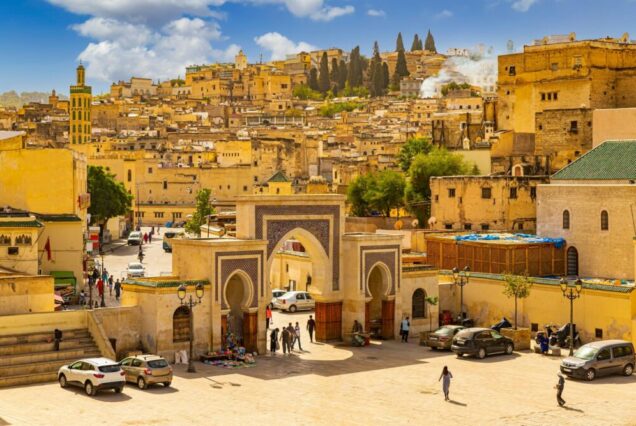
The two medieval cities of Fez and Meknes can develop primarily cultural tourism: Fez, the spiritual capital of the Kingdom, is known for its traditional arts and its rich and authentic architectural heritage; Meknes, with its heritage and the Volubilis site, constitutes an attractive crossroads of civilizations. Both cities are UNESCO World Heritage sites.

The province of Moulay Yacoub is known for its thermal springs, which have therapeutic properties in a peaceful, hilly landscape, offering the opportunity to diversify the region’s tourism offerings by adding spa tourism.

The Fes metropolitan area is the leading urban center of the Fes-Meknes region and the third largest metropolitan area in Morocco after Casablanca and Rabat-Salé. Its urban development has spanned several centuries. The factors and mechanisms that have governed the main stages of its evolution are inextricably linked to the contexts of its hinterland and the rest of the Kingdom. The urban fabric of Fes and its spatial expansion still bear the imprints of historical upheavals and regional and national socio-economic transformations.

The origins of Fes date back to the reign of Idris I, who, in 789, was seeking a location for his capital. The chosen site was the valley of the Oued Fes, a small tributary of the Sebou River; ravines bring it abundant spring water that has rarely run dry throughout history (DESPOIS J, 1967). Water was supplied almost entirely by the natural environment flowing through the city’s neighborhoods. As for the advantages of its regional location, they proved strategic, as the city, throughout its long urban history, needed to maintain connections with the Mediterranean coast and the Atlantic coast via the valleys of the Oueds Mikkès, Sebou, and Lebene, or with the central Maghreb via the Taza corridor, and with the Tafilalet region via the Laânnoceur passes and the Boulemane road.

The first nucleus of the city of Fez dates back to the 8th century when the left bank of the Oued Fez, a tributary of the Oued Sebou, was chosen by Idris I to build the capital of his dynasty. His son and successor, Idris II, consolidated and solidified this choice by extending this initial settlement onto the right bank of the Oued Fez. The site offered several advantages (abundant water resources, availability of building materials, and a strategic location in relation to north-south and east-west communication routes).

The arrival of the Marinids was marked by the establishment of a new extension within the city of Fez, Fez Jdid, southwest of Fez El Bali. This extension included an administrative center, a royal palace, a commercial area, and residences, all enclosed by ramparts.
Included/Excluded

  • Accommodation
  • Breakfast
  • Transport
  • Guide
  • Taxes and services
  • Drinks
  • Gratuities
  • All items not shown above

Tour Plan

Day 1 Fes arrival

Arrive at Fes Saiss airport  in Fes,  Assistance & transfert to your hotel.

Overnight at the hotel.

day 2 Fes

Breakfast at the hotel.

Full day city tour of Fes

A private A/c with English speaking driver will be at your disposal for the day.

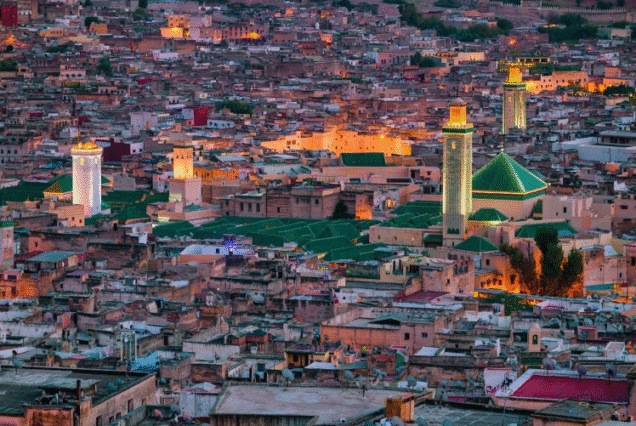
Explore the cultural and spiritual center of Morocco during this full day tour of Fes. Also known as Fes el Bali, this UNESCO World Heritage Site was founded in the 9th century, and is home to the world's oldest university. The city of Fes reached its true economic and cultural height in the 13th–14th centuries under the Merinides, when it replaced Marrakech as the capital of the kingdom.  Although the political capital of Morocco was transferred to Rabat in 1912, Fes has retained its status as the country's Artisan centre. Artisan workshops in the medina are as active today as they were 100 years ago, and strongly contribute to the city’s industrial economy. Trades such as blacksmithing, leather working, ceramics, silk, tapestries, and sculpting are still practiced in these workshops today. The original ramparts still protect this ancient city and its estimated 9000 narrow passageways and bustling streets.

Highlights of the tour will be observing the vast tanneries from a family home for this unique view, and the spice souk, El Attarine, without doubt the most vibrant in Fes. The henna and wood working souks are located in the Nejjarine neighborhood and the scent of cedar wood is noticeable. The main plaza is planted with trees and provides a shaded haven from the warm sun. Various natural products derived from henna are sold here. Nejjarine is also where the fabric dyers are located; wool and cotton are treated and you can see the colours used floating along the streets after the rinsing.

Optional Lunch will be at Moroccan Restaurant in the Medina

Overnight at the hotel.

Day 3 Fes - Volubilis -Meknes

Breakfast at the hotel.

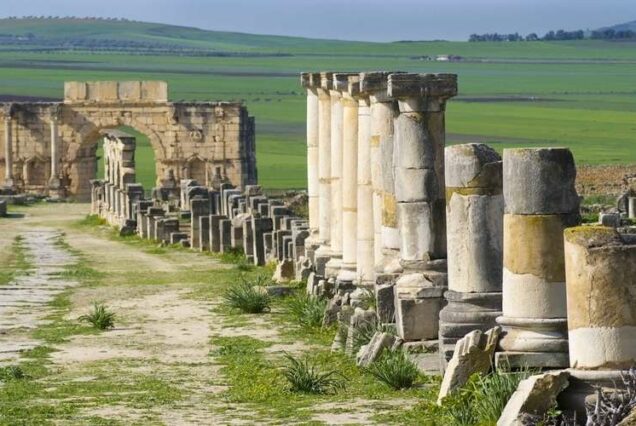
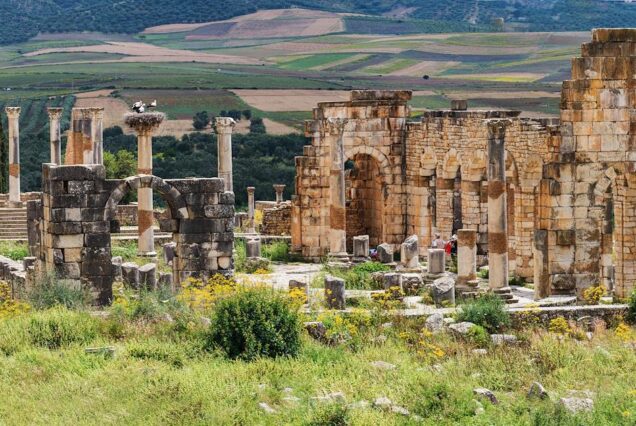
Drive from Fes toward Meknes via the Roman ruins at Volubulis, nearby Moulay Idriss.

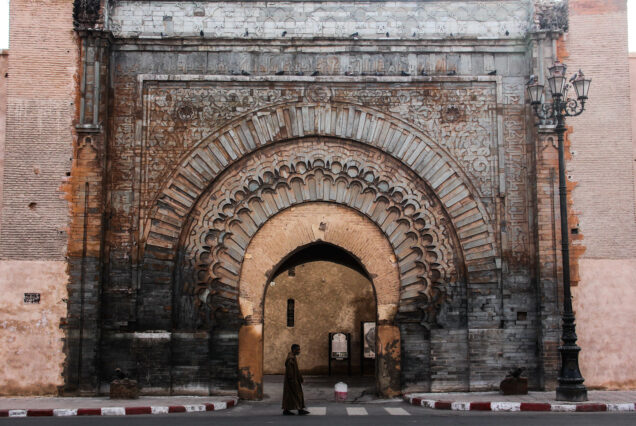
Meknes along with the Roman city of Volubilis. In antiquity, Volubilis was an important Roman town situated near the westernmost border of Roman Empire. It was built on the site of a previous Carthaginian settlement from the third century BC. Volubilis was the administrative center of the province in Roman Africa called Mauretania Tingitana. The fertile lands of the province produced many commodities such as grain and olive oil, which were exported to Rome, contributing to the province's wealth and prosperity. Discover the Imperial city of Meknes known as the “Moroccan Versailles.”  Meknes was founded in the 17th century by King Moulay Ismail. It is famous for its 25-mile-long walls.

Optional lunch at Moroccan Restaurant in Meknes

Overnight at the hotel in Meknes.

Day 4 Meknes - Elhajeb - Ifrane

Breakfast at the hotel.

Departure to Ifrane via Elhajeb. Province has the potential to develop agritourism, ecotourism, and recreational activities (hunting, fishing, hiking, lake circuits, mountain sports, etc.) thanks to its natural sites: Ain Khadem Spring, Assalama Spring, Ain Bitit Spring, Ain Bouteghzaz Spring, Ain Madani Spring, etc.

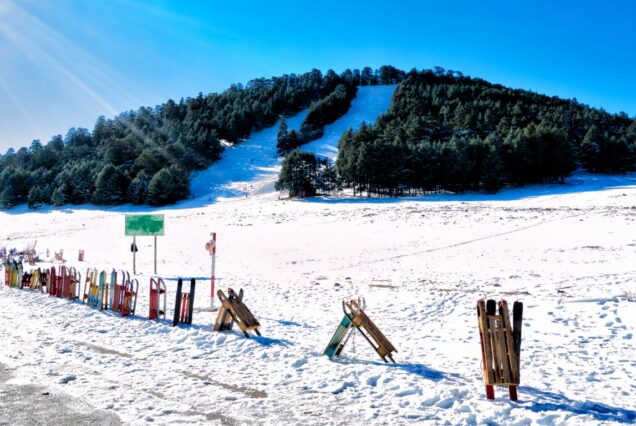
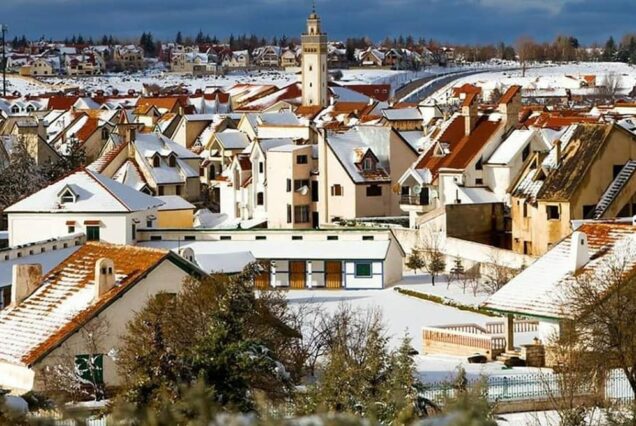
Arrive to Ifrane brief city tour. The province of Ifrane abounds with important and attractive natural sites within a cedar forest that covers 115,920 hectares. These are springs, lakes, and rivers offering opportunities for the development of nature tourism, rural tourism, and ecotourism:

Rest of the day at leisure

Overnight at the hotel

day 5 Ifrane - Fes Airport

Breakfast at the hotel

Private transfer from Ifrane to Fes saiss airport

Tour Map

Please enable JavaScript in your browser to complete this form.

Book Your Tour 


Date Booking

You May Like